Talk Tilte: Green Rust Catalysts for Hydrogen Storage Materials
Abstract:
Sodium borohydride (NaBH4, SBH) is a high-capacity hydrogen-storage material that releases hydrogen via catalytic hydrolysis at lower temperatures. Although the United States Department of Energy (DOE) proposed a no-go recommendation for SBH hydrolysis for onboard system applications mainly due to the high cost of SBH and its regeneration, SBH is still considered to be an attractive candidate because a Japanese company (Nippon Light Metal Company, Ltd.) developed a low-cost production and re-generation method in 2019. On the other hand, the development of efficient and cost-effective catalysts for the dehydrogenation of SBH remains challenging.
We have developed iron-based (photo)catalysts for reactions including dehydrogenation of hydrogen storage-storage materials.1 Recently, we report that a mixed-valent [FeII−FeIII] iron hydroxide, which we term green rust (GR, a family of layered double hydroxide), treated with a CuCl2 solution, shows a good catalytic activity toward SBH hydrolysis.2 The Cu-modified GR-based exhibits TOF of up to 5000 min–1 for the hydrolysis of SBH that is comparable to or one or two orders of magnitude higher than existing catalysts based on novel and precious metals tested under similar conditions.
References:
E.-E. M. Ezz-Elregal et al., ACS Catal. 2025, 15, 12269.
a) D. Mani et al., J. Mater. Chem. A 2018, 6, 5166; b) Y. Ide et al., Chem. Sci. 2019, 10, 6604; c) R. Tahawy et al., Appl. Catal. B. 2021, 286, 119854; d) A. H. Zaki et al., ACS Sustainable Chem. Eng. 2023, 11, 2295; e) H. El-Hosainy et al., Chem. Commun. 2025, 61, 5435; f) E.-E. M. Ezz-Elregal et al., Clay Sci., in press.
Biographical Sketch
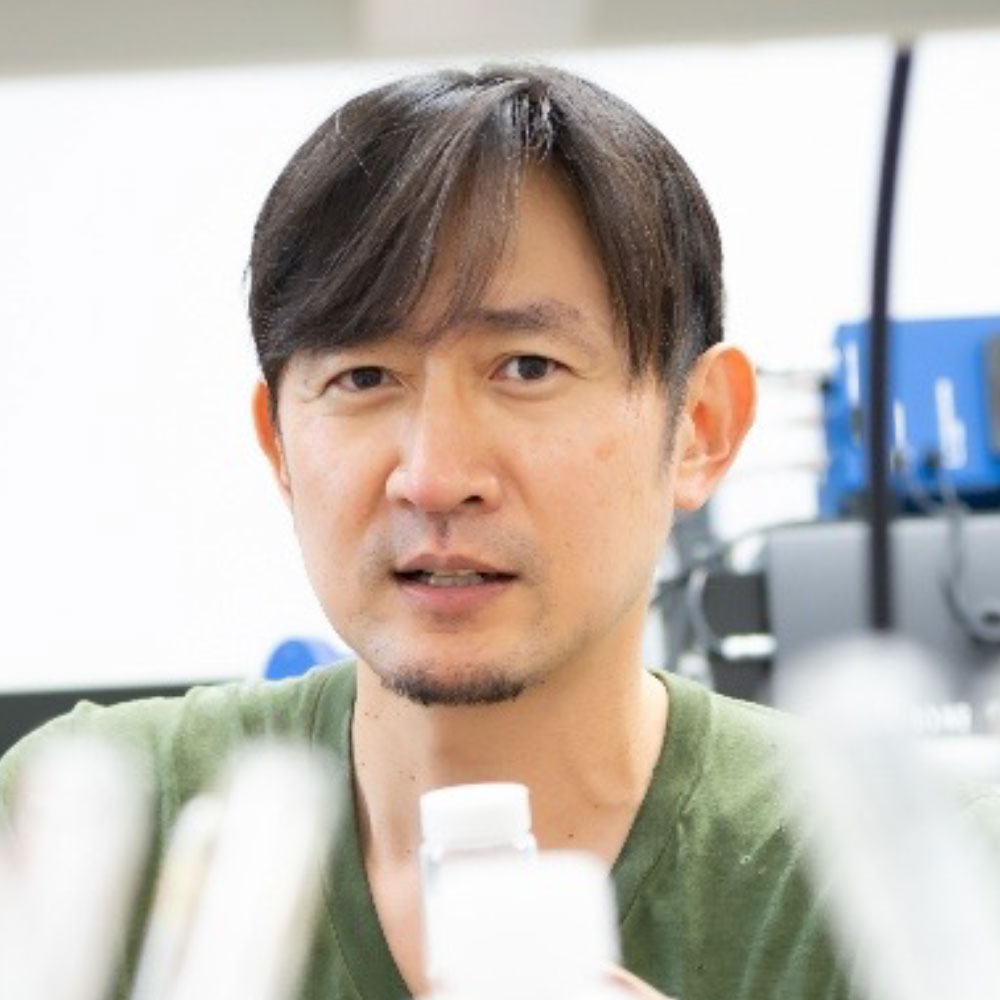
Yusuke Ide is a group leader at the Research Center for Materials Nanoarchitectonics (WPI-MANA), National Institute for Materials Science (NIMS), Japan and a professor of NIMS-YNU joint graduate program, Graduate School of Engineering Science, Yokohama National University (YNU), Japan. He received his Ph.D. from Waseda University in 2007 under the supervision of Prof. Makoto Ogawa. After working as a research associate in his laboratory, in 2010, he moved to Hiroshima University to work as an assistant professor (Prof. Tsuneji Sano’s laboratory). Since 2012, he has been working at NIMS. His current interests include the development of high-performance but cost-effective and environmentally friendly materials (e.g., iron-based one) alternative to existing commodities and industrial products. He also tries to synthesize key materials for realizing hydrogen society.